
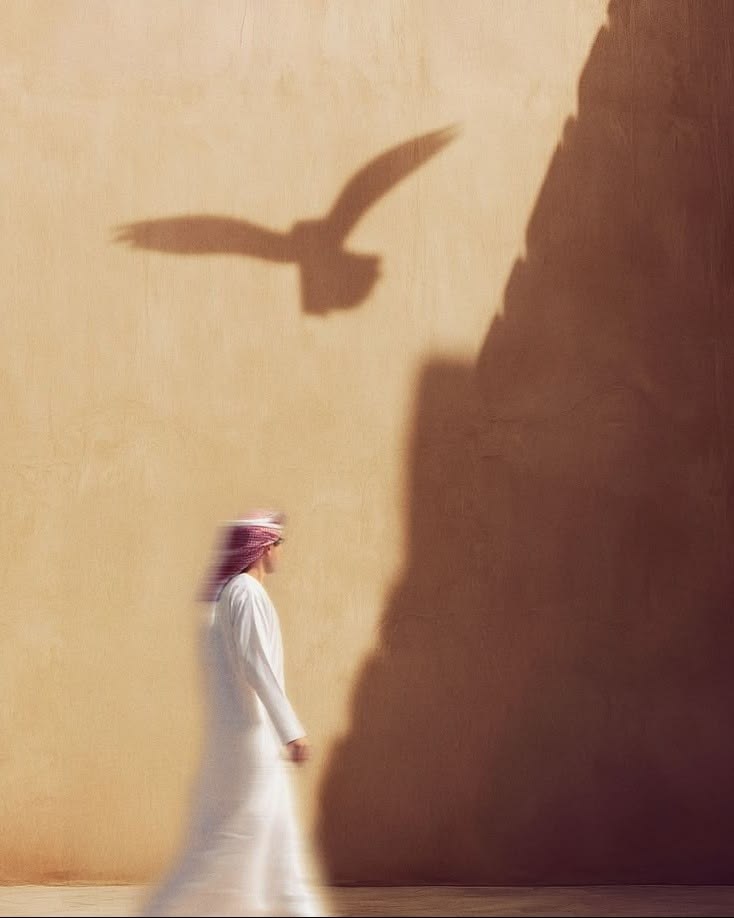
What does Islam look like when it takes root somewhere new?
The answer depends entirely on where you are.
In Morocco, it might look like a whitewashed riad opening onto an intricate courtyard, with carved plaster, geometric tilework, and a square minaret rising above the medina. In southern Spain, it might sound like an ordinary Spanish sentence containing a word that has traveled through centuries of Arabic influence. Along the East African coast, it might arrive at the table as a fragrant plate of rice seasoned by traditions that stretch across the Indian Ocean. In South Asia, it might be painted onto a bride’s hands. In the southern Philippines, it might be carved into the walls of a home.
None of these things look exactly alike.
And that is the point.
When Islam spread beyond the Arabian Peninsula, it did not enter a world without culture. It encountered civilizations with their own languages, artistic traditions, political systems, cuisines, architecture, customs, and ways of life. The history that followed was not simply a story of one culture replacing another.
It was a story of encounter.
Sometimes that encounter produced tension or conflict. Sometimes traditions disappeared or were transformed. But often, something else happened: local cultures and Islamic traditions influenced one another, producing expressions of Muslim life that were deeply rooted in a particular place.
That is one of the most fascinating things about traveling through the Muslim world.
You can visit two Muslim-majority countries thousands of miles apart and feel, almost immediately, that they belong to completely different cultural worlds. And yet there are also threads connecting them,shared religious practices, architecture, scholarship, trade routes, pilgrimage, language, and history.
The Muslim world has never been culturally uniform.
It has always been a conversation between the universal and the local.
Islam Didn't Arrive in a Cultural Vacuum
To understand this, it helps to step back from the modern idea of “Islamic culture.”
There is no single culture that Islam brought with it in the way we might imagine a packaged set of traditions arriving in a new country.
Islam is a religion. Muslims, however, have always lived in particular places.
They speak particular languages. They eat the food available to them. They build with the materials found around them. They inherit artistic traditions from their families and communities. They wear clothing suited to their climate. They celebrate weddings according to local customs. They interact with neighboring cultures.
As Islam spread, these realities did not disappear.
Instead, Islamic civilization grew across an enormous geographic area, from West Africa to Southeast Asia and from the Iberian Peninsula to Central Asia. The further Islam traveled, the more local traditions became part of the story of what Muslim life looked like in that place.
Trade was particularly important.
Merchants moved across the Sahara and the Indian Ocean. Scholars traveled between cities. Pilgrims made their way to Makkah. Empires expanded. Families migrated. Craftspeople carried techniques from one city to another. Books and ideas traveled along the same routes as spices, textiles, ceramics, and precious metals.
These networks created connections between people who might otherwise never have encountered one another.
And culture traveled with them.
But it did not always travel unchanged.
A tradition could enter a new place, encounter something already there, and emerge as something different.
You can see that process in architecture, language, food, art, and even sport.
Architecture: When the Maghreb Became Islamic
North Africa offers one of the clearest examples.
Islam reached the region in the 7th century, but the communities living across North Africa were hardly culturally blank slates. Amazigh peoples had their own architectural traditions, artistic vocabulary, building techniques, and ways of organizing communities and homes.
As Islam became established across the Maghreb, local traditions became part of the architectural landscape of Muslim life.
Think about the courtyard.
Across much of North African architecture, the inward-facing courtyard became an important organizing feature of homes, religious institutions, and palaces. Instead of orienting every space toward the street, buildings could turn inward around a private central space.
Then there is decoration.
Geometric patterns, carved plaster, woodwork, tilework, and other forms of craftsmanship became extraordinarily sophisticated across the region. Mosques and madrasas developed their own visual languages, but so did homes, markets, palaces, fountains, and public buildings.
Even the minaret became regionally distinctive.
In Morocco and much of the western Islamic world, the square minaret became one of the most recognizable features of the architectural landscape.
None of this means that there was a single moment when “Amazigh architecture” became “Islamic architecture.” The process was much more gradual and complicated than that.
Architectural traditions evolve through generations.
Builders work with the materials they know. Craftspeople preserve techniques. Rulers commission buildings according to their tastes. Religious institutions develop particular needs. Cities influence one another.
Over time, those layers become difficult to separate.
That is why walking through a Moroccan medina can feel so different from walking through a mosque complex in Cairo or Istanbul. They are all part of the broader architectural history of the Muslim world, but each carries the imprint of its own region.
Islam connected them.
Place made them different.
Language: You Can Still Hear Al-Andalus in Spanish
Sometimes cultural exchange leaves behind something even less visible than architecture.
A word.
In 711, Muslim forces entered the Iberian Peninsula, beginning centuries of Muslim rule and cultural exchange in parts of what is now Spain and Portugal.
The Iberian Peninsula was already linguistically diverse. Romance languages derived from Latin were spoken alongside other languages, including Basque and later varieties of Arabic and other languages brought or developed through changing political and cultural circumstances.
Over the centuries, Arabic and the Romance languages spoken in Iberia influenced one another.
The legacy is still sitting in the Spanish dictionary.
Consider the word aceite, meaning oil. It comes from the Arabic az-zayt.
Azúcar, sugar, traces back to as-sukkar.
Almohada, pillow, comes from al-mikhadda.
Alcalde, the modern Spanish word for mayor, is related to the Arabic al-qāḍī, referring to a judge.
Even arroz, rice, comes through Arabic from a word ultimately associated with the same wider linguistic family.
And then there is ojalá.
A Spanish speaker might use it to say “hopefully” or “I hope so,” but the word ultimately comes from the Arabic expression in shā’ Allāh, “if God wills.”
Think about how extraordinary that is.
Someone today can use ojalá without knowing anything about Al-Andalus, Arabic, or Islamic history. They may never have studied the centuries of Muslim rule in Iberia.
And yet a tiny piece of that history survives every time the word is spoken.
This is one of the reasons heritage is so much more interesting than a list of monuments.
History does not always announce itself.
Sometimes it hides in the words we use without thinking.
The Indian Ocean: How a Trade Network Created a Cuisine
The East African coast tells a different story.
Here, the relationship between Islam and local culture developed within one of the world's great commercial networks: the Indian Ocean.
Long before the arrival of Islam, coastal African communities were trading with other parts of the region. The Swahili coast was connected to a much larger world through maritime trade, and its people had their own foodways, languages, technologies, and cultural traditions.
Islam became an important part of this coastal world over centuries.
Muslim merchants traveled between East Africa, Arabia, Persia, India, and beyond. Some settled along the coast. Communities grew. Mosques were built. Commercial relationships became family relationships. Cities such as Kilwa and Mombasa became important centers of trade.
And, naturally, food traveled too.
The local cuisine was already built around ingredients available along the coast and in the surrounding region: grains such as millet and sorghum, coconut, fish, bananas, and other locally available foods.
Then came new influences.
Rice became increasingly important. Spices and cooking techniques moved across the Indian Ocean. Culinary traditions from Arabia, Persia, and South Asia entered into conversation with existing African foodways.
The result was Swahili cuisine.
Pilau and biryani are particularly recognizable examples, but the larger story is much more interesting than any individual dish.
Swahili food is a record of movement.
It reflects African roots and centuries of exchange with the wider Indian Ocean world. It tells us that culture does not always move in one direction. There was no single “source culture” responsible for everything that eventually appeared on the Swahili table.
Instead, ingredients, techniques, and ideas met one another in a region where people had been crossing the ocean for centuries.
The food tells the story better than almost anything else could.
South Asia: When Henna Became Mehndi
Few cultural traditions demonstrate the complexity of this process better than mehndi.
Henna itself is not exclusively Muslim, South Asian, or even associated only with weddings. The plant has been used across a broad geographic region for centuries, including for practical purposes such as cooling the skin in hot climates.
But the practice of decorating the body with henna developed into something much more elaborate over time.
South Asia was already home to extraordinarily rich traditions of painting, pattern-making, textiles, ornamentation, and ceremonial decoration. As Muslim dynasties established themselves in different parts of the region, particularly during the Mughal period, Persianate and South Asian artistic traditions interacted in increasingly complex ways.
The result was not simply Persian art replacing South Asian art, or Islamic traditions replacing local ones.
Instead, artists, craftspeople, courts, families, and communities were participating in an ongoing exchange.
Henna decoration became increasingly elaborate.
Patterns grew more intricate. Designs became associated with particular ceremonies and celebrations. Bridal mehndi developed into an important part of wedding culture in many communities.
And then something even more interesting happened.
The practice crossed religious boundaries.
Today, mehndi is deeply familiar across South Asian communities, including among Hindus, Muslims, Sikhs, Christians, and others. It can be part of weddings, festivals, celebrations, and simply the experience of getting together with friends and family.
That history complicates the way we sometimes talk about cultural ownership.
A tradition can have connections to particular religious or historical communities without belonging exclusively to them.
Culture is porous.
People borrow. People adapt. People reinterpret. And eventually, a practice that once had a particular context can become part of a much broader cultural identity.
The Maranao: Islam in a Southeast Asian Artistic Tradition
The same principle appears in the southern Philippines.
The Maranao people had a rich artistic tradition before Islam became established among them. Their communities developed distinctive forms of decorative art, architecture, craftsmanship, and design.
When Islam became part of Maranao life, those traditions did not simply disappear.
They became part of how Maranao Muslims expressed themselves.
One of the best-known examples is okir, a highly intricate decorative tradition featuring flowing, organic forms. These designs can be found on houses, boats, musical instruments, Qur'an stands, and other objects.
The significance of okir is not simply aesthetic.
It is a reminder that Muslim identity has always existed within particular cultural contexts.
A Maranao Muslim does not have to abandon Maranao heritage to be part of the global Muslim community.
The two identities can exist together.
In fact, that combination is precisely what makes Maranao Muslim heritage distinctive.
The same thing happens everywhere.
Muslims in Indonesia developed cultures that are unmistakably Indonesian. Muslims in Senegal developed traditions rooted in West Africa. Muslims in Bosnia developed traditions shaped by the Balkans. Muslims in Central Asia inherited cultures shaped by nomadic and settled societies across the Eurasian steppe.
Being part of a global religious community has never required people to become culturally identical.
Central Asia: The Horse, the Court, and the Polo Field
Central Asia offers another fascinating example because the cultural exchange here involves something that might not immediately seem “Islamic” at all: polo.
Horses were central to many Central Asian societies long before Islam spread through the region. Horses were essential for transportation, warfare, trade, status, and daily life across the Eurasian steppe.
As Islam spread into Central Asia through trade, migration, conquest, and expanding Muslim states, these existing equestrian traditions became part of the culture of Muslim courts.
Polo had ancient roots in Central Asia and the Persianate world and eventually became associated with rulers and elites across parts of the Muslim world.
It was more than a sport.
Courtly games often communicated status. They demonstrated skill, physical ability, wealth, and access to horses and trained animals. A game that required a trained horse, equipment, space, and considerable skill was naturally suited to elite environments.
From Central Asia and the Persianate world, polo traveled.
It moved through courts and cultures and eventually far beyond the regions where it originated.
Today, you can encounter polo in places that have almost nothing culturally in common with the societies where the game first developed.
But its journey is another example of how traditions move.
A practice rooted in one part of the world can become part of a much larger cultural story.
The Beauty of the Muslim World Is in the Differences
Put all of these examples next to one another and something becomes clear.
The history of Islam is not a story of cultural sameness.
It is a story of connection.
Islam created a sense of belonging that could stretch across enormous distances. A Muslim in Morocco and a Muslim in Central Asia might share religious practices, texts, beliefs, and institutions despite living thousands of miles apart.
But they were not living in the same society.
They spoke different languages.
They cooked different food.
They built different homes.
They inherited different artistic traditions.
They responded to different landscapes and climates.
They had different histories.
And over centuries, those differences became part of the richness of Muslim civilization itself.
This is why the phrase “Islamic culture” can be both useful and misleading.
Useful, because there are undeniably shared traditions that connect Muslim communities across the world.
Misleading, because it can make those communities sound much more culturally uniform than they actually are.
There is no single Muslim aesthetic.
There is no single Muslim cuisine.
There is no single Muslim architectural style.
There is no single way that a Muslim wedding looks, sounds, or feels.
There is instead an enormous collection of local cultures that have interacted with Islam in different ways over more than fourteen centuries.
Sometimes the influence went from the Islamic world into a local culture.
Sometimes local traditions reshaped how Islam was expressed.
Most often, the reality was somewhere in between.
And sometimes the resulting tradition became so deeply rooted that it is difficult to say where one influence ends and another begins.
That is what makes heritage worth exploring.
Looking at the Muslim World Through Its Layers
When we travel, it is easy to reduce a destination to its most recognizable sights.
A mosque.
A palace.
A market.
A historic city.
But places are rarely made up of one layer of history.
Look more closely and you start to see the layers.
A Moroccan building can reflect Amazigh craftsmanship, Islamic architectural principles, Andalusian influence, local materials, and centuries of regional history.
A Spanish word can carry an Arabic etymology.
A Swahili dish can reflect African ingredients alongside centuries of Indian Ocean exchange.
A South Asian wedding can include a tradition whose history crosses religious and cultural boundaries.
A Maranao carving can express both a local artistic heritage and a Muslim identity.
A sport played around the world can trace part of its history back to the horse cultures of Central Asia.
This is what makes Muslim heritage so compelling.
It is not just the story of where Islam went.
It is the story of what happened when Islam arrived.
And that story is different everywhere.
At Heritage by Ibadah, that's the part of travel we want to explore: not just the places Muslims have lived, built, traded, worshipped, and traveled through, but the cultures that emerged along the way.
Because sometimes the best way to understand a place is not to ask, “What makes this Muslim?”
It is to ask:
What happened when Islam met this place?
The answer might be hiding in its architecture.
In its food.
In its language.
In its art.
In its weddings.
In its music.
In its cities.
And once you start looking for those connections, the Muslim world becomes much bigger than a collection of destinations.
It becomes a living history of people, places, and ideas meeting one another across centuries.
And there is still so much of that story left to discover.